The history of Althen-des-Paluds
From the dry marshes of Monteux to the emergence of the mills in Garance... Discover the colorful history of the village of Althen-des-Paluds with Jean Althen as the headliner!
The birth of the village
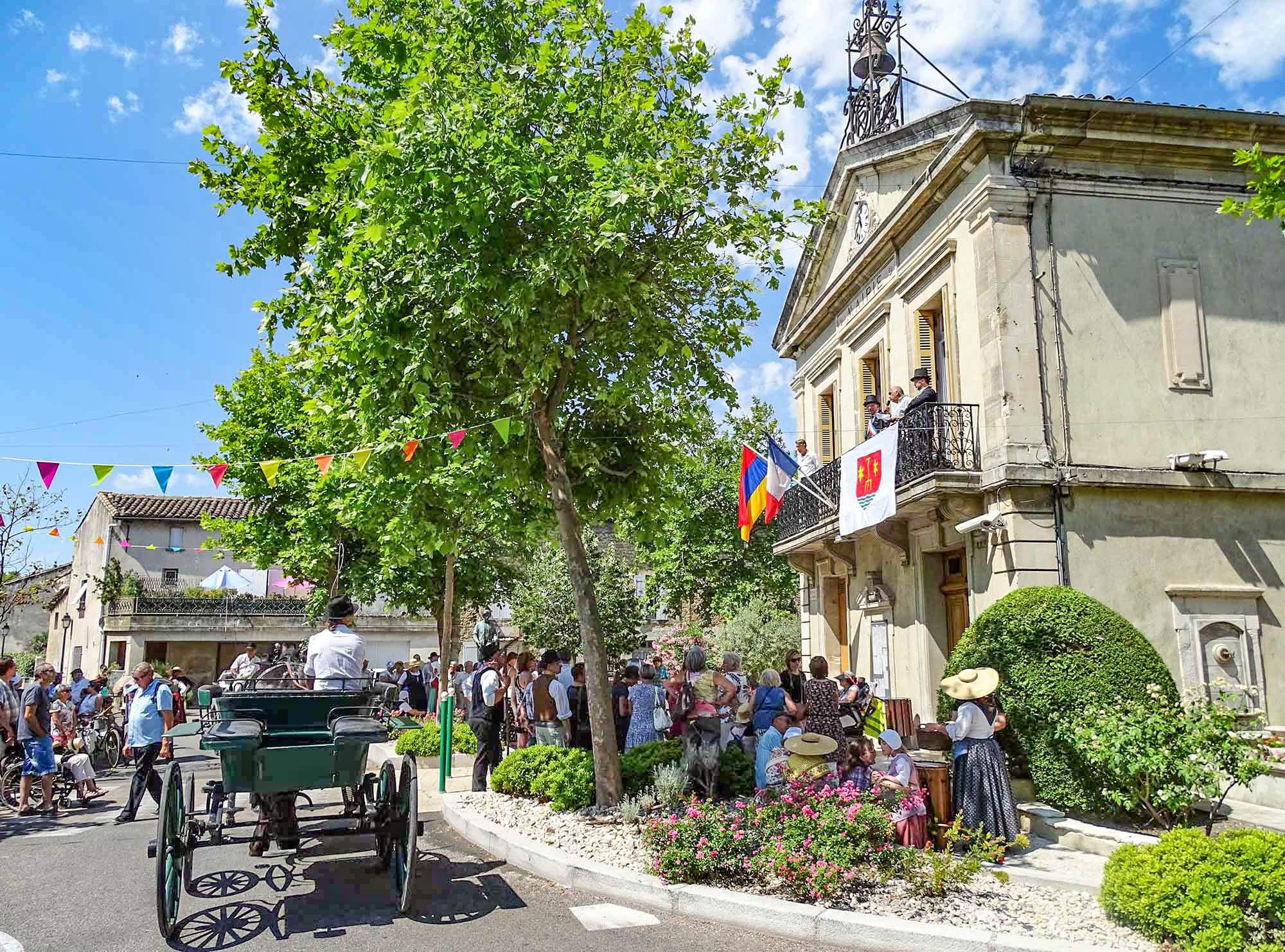
Did you know that? Althen-des-Paluds is one of the most recent towns in Vaucluse! The town of Althen-des-Paluds was officially created on June 5, 1845 following a royal ordinance dated June 4.
Originally, the village was a hamlet forming part of the perimeter of the city of Monteux, and was called 'Les Paluds de Monteux'. Indeed, this territory was swampy for a long time, before being cleaned up in the 16th century.
La Garance
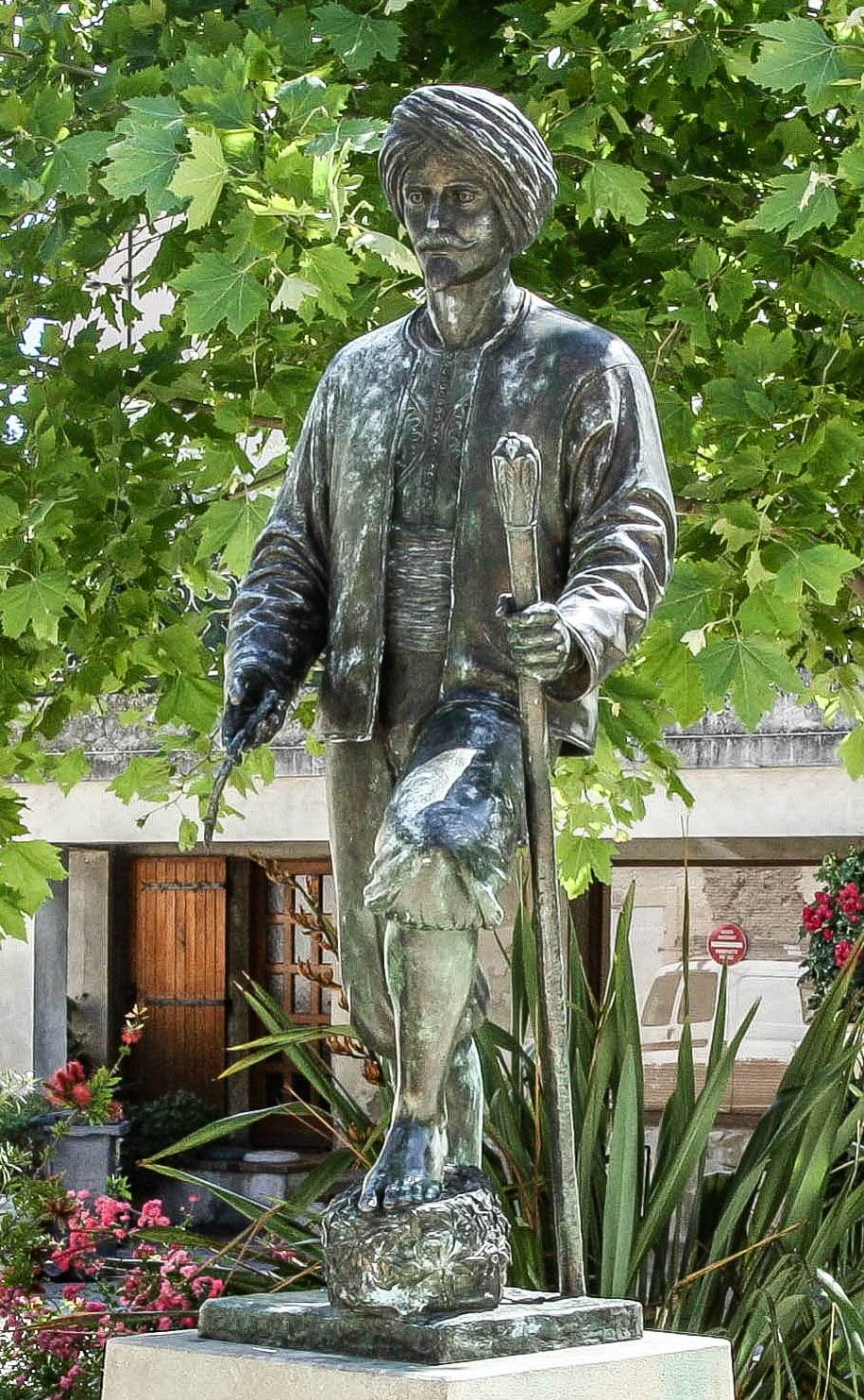
But what most strongly marked the history of this small village of Althen-des-Paluds was a plant: madder! Established in the 18th century by the Armenian Hovhannès Althounian, known as Jean Althen, its culture brought prosperity to the territory: this is how the name of this man was given to the village.
But what is madder? Native to the Near East, madder (rubia tinctorum) is a plant with bright yellow flowers. It was cultivated from the 18th century until the beginning of the 20th century for its root, with which red dyes were made. These were mainly used for wool, silk and cotton fabric.
The incredible story of Jean Althen
Jean Althen is originally from the Caucasus region (Armenia - Persia), he was born around 1710 (without knowing the exact location). His father was governor of the province of Persia and ambassador to the Germanic emperor Joseph I, he was massacred by the Turks during a revolution. Jean escaped the massacre, and was sold as a slave to a merchant: he had to work on madder and cotton plantations in Minor Asia.
Several years later, he managed to escape and went to Smyrna where he embarked for France, with the help of the French consul who had appreciated the value of his knowledge of the cultivation of cotton and madder.
Arrived in Marseille in 1736 (it is said that he would have hidden madder seeds in his travel stick!) , he had the opportunity to be presented to King Louis XV at the court of Versailles: he then received a medal, a pension of 300 pounds as well as royal protection in order to encourage him to cultivate garance in France... However, his first ambition was to plant cotton in France: unfortunately, in Castres or Montpellier, the tests did not give results, because of the unfavourable climate. Jean Althen then made the decision to return to Marseille to grow madder, but again the project failed: the land was not fertile enough!
Jean Althen then turned to the plains of Comtat: finally, he arrived there... The land was favorable to this type of crop.
Madder is a dye plant whose roots can be used to prepare dyes. Jean Althen prepared essays on the virtues of madder to dye fabrics red, which he presented in 1763. After showing the advantage of local cultivation over foreign imports, he proposed that a mill be established (exclusive property of Avignon) in order to reduce madder roots into powder and thus use it as a dye. The Council of the city of Avignon then gave him the exclusive privilege of growing madder for ten years, subject to the condition of planting a major crop by the following year.
Jean Althen won the trust of the Marquis de Caumont (Joseph François Xavier de Seytres de Perussis), and was entrusted with the exploitation of one of these lands to carry out new tests. He put all his heart into developing the establishment of garancières: as early as 1772, they supplied several factories, in particular that of the Indians of Orange.
Jean Althen died in Caumont in November 1774.
These guarantors still lacked opportunities, so unfortunately he could not see with his own eyes the fruits of his work and the fabulous prosperity granted by the Garance culture to this region, starting at the end of the 1790s.
This lasted more than a century, as soon as it was introduced into the ancient district of Monteux 'Les Paluds', which became Althen-des-Paluds in 1845...